
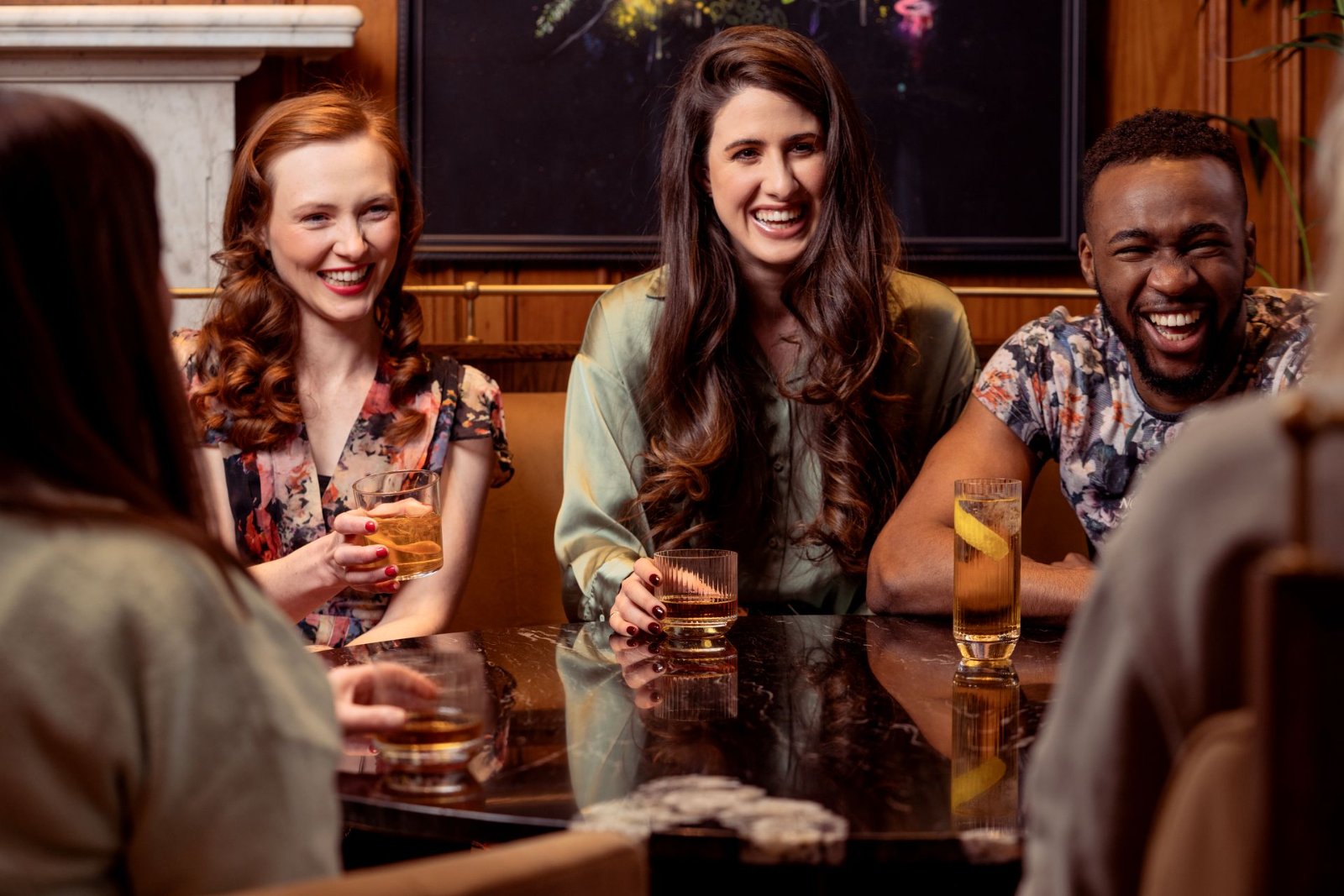
When most people think about bar crawling along the legendary Sunset Strip in West Hollywood, California, they picture neon lights, pulsing music, and the kind of spontaneous fun that makes for great stories on Monday morning. What they don’t picture is a measurable improvement in cognitive performance, sharper social intelligence, and a neurological workout that rivals some of the brain-training apps sitting unused on their phones.
But here’s the thing — science, psychology, and a growing body of research on social cognition suggest that strategic, mindful social interactions in dynamic environments like those found on the Sunset Strip can genuinely sharpen your brain in ways that sitting alone at your desk simply cannot. And when you pair that science with a well-organized experience like the ones offered by Barcrawlerz, you’re not just having a good time — you’re actively investing in your mental fitness.
Let’s dig into exactly what’s happening inside your skull when you navigate a lively bar crawl, why it matters for your cognitive health, and how you can make the most of every social interaction along the way.
Understanding the Science of Social Cognition and Brain Health
Before we get into the specifics of bar crawling as a cognitive exercise, it’s worth grounding ourselves in what neuroscience actually tells us about social interaction and brain function. The human brain is, at its core, a social organ. It evolved over hundreds of thousands of years in the context of group living, cooperative hunting, and complex tribal dynamics.
Dr. Matthew Lieberman, a social neuroscience researcher at UCLA, has extensively studied how the brain’s default mode network — the system that activates when we’re “at rest” — is actually deeply engaged in social thinking. In other words, when your brain isn’t doing anything else, it’s thinking about other people. That’s how central social processing is to our cognitive architecture.
“Being socially connected is our brain’s lifelong passion. It is built into our operating system.” — Dr. Matthew Lieberman, Social: Why Our Brains Are Wired to Connect
What this means practically is that engaging in rich, varied social interactions doesn’t just feel good — it actively exercises some of the most sophisticated neural networks in your brain. And when those interactions happen in novel, stimulating environments like the bars and venues that line the Sunset Strip, the cognitive benefits are amplified significantly.
What Makes Bar Crawling Uniquely Stimulating for the Brain
Not all social interactions are created equal when it comes to cognitive stimulation. Chatting with the same coworkers about the same topics in the same break room every day doesn’t push your brain very hard. But a well-structured bar crawl through a vibrant stretch like the Sunset Strip introduces a cascade of novel stimuli that force your brain to work harder, adapt faster, and perform at a higher level.
Environmental Novelty and Neuroplasticity
Each time you walk into a new venue — whether it’s a sleek rooftop lounge, a classic rock bar, or an intimate cocktail den — your brain is doing something remarkable. It’s rapidly building a new spatial map, assessing social hierarchies in the room, calibrating ambient noise levels, and updating its predictions about what kind of interactions are likely to occur. This rapid environmental assessment is cognitively demanding in the best possible way.
Research on neuroplasticity consistently shows that exposure to novel environments promotes the growth of new neural connections. The hippocampus, which is responsible for both memory formation and spatial navigation, is particularly responsive to new environments. Every new bar you enter is, in a very real sense, a mini-workout for your memory center.
The Cognitive Load of Meeting Strangers
Meeting new people requires a surprisingly complex set of cognitive operations. You’re reading facial expressions, interpreting tone of voice, tracking conversational threads, formulating responses, managing your own emotional reactions, and simultaneously updating your mental model of who this person is and what they might want from the interaction. Psychologists refer to this as “theory of mind” — the ability to attribute mental states to others — and it’s one of the most cognitively demanding things humans do.
A bar crawl, by its very nature, puts you in contact with a rotating cast of new faces throughout the evening. Each new person you meet is a fresh cognitive challenge. Each conversation that goes somewhere unexpected — and on the Sunset Strip, they often do — forces your prefrontal cortex to adapt, improvise, and problem-solve in real time.
Navigating Group Dynamics
If you’re crawling with a group — which is the whole point of a structured experience with Barcrawlerz — you’re also constantly managing group dynamics. Who’s getting along with whom? Who needs to be included more? How do you introduce your friend to someone new in a way that gets the conversation flowing? These are sophisticated social calculations that require working memory, emotional intelligence, and executive function working in harmony.
The Specific Cognitive Skills That Bar Crawling Sharpens
Let’s get specific. What exactly gets sharper when you engage in strategic, socially intentional bar crawling? The list is more impressive than you might expect.
Active Listening and Verbal Processing Speed
In a noisy bar environment, active listening becomes a genuine skill. You’re filtering background noise, picking out the relevant signal of your conversation partner’s voice, and processing meaning at speed. This is cognitively demanding in ways that quiet, one-on-one conversations simply aren’t. Over time, regularly practicing this kind of focused listening in challenging acoustic environments can improve your verbal processing speed and auditory attention — skills that transfer directly to high-stakes professional environments like meetings, presentations, and negotiations.
Emotional Regulation and Adaptability
Bar environments are emotionally charged spaces. People are more expressive, more spontaneous, and less filtered than they might be in professional settings. Navigating this emotional landscape — staying grounded when someone is overly enthusiastic, maintaining composure when a conversation takes an unexpected turn, finding the right tone when meeting someone who seems guarded — is an exercise in emotional regulation that directly strengthens the prefrontal cortex’s ability to manage the amygdala’s reactive impulses.
This is the neural equivalent of weight training. The more you practice staying emotionally calibrated in dynamic social environments, the better your brain gets at it everywhere else in your life.
Improvisational Thinking and Creative Problem-Solving
Great conversations, especially with strangers, require improvisational thinking. You can’t script them. You have to respond to what’s actually being said, pivot when the conversation changes direction, and find creative angles that keep the exchange interesting. This kind of improvisational social thinking is closely linked to creative problem-solving more broadly — both draw on the brain’s default mode network and executive function systems working in concert.
Studies on improvisational theater — a close cousin to the kind of spontaneous social performance that happens on a good bar crawl — have shown measurable improvements in creative thinking, cognitive flexibility, and even working memory in participants who practice regularly.
Pattern Recognition and Social Intuition
The more diverse social interactions you have, the better your brain gets at recognizing patterns in human behavior. You start to notice micro-expressions more quickly, pick up on conversational subtext more accurately, and develop a more nuanced intuition for what people are actually communicating beneath the surface of their words. This is social pattern recognition, and it’s an incredibly valuable cognitive skill in virtually every domain of life — from leadership to parenting to creative collaboration.
Why the Sunset Strip Is a Particularly Rich Environment for Cognitive Social Training
Location matters more than you might think when it comes to the quality of social cognitive training you’re getting. And the Sunset Strip in West Hollywood, California, is genuinely one of the most cognitively rich social environments in the world.
Diversity of People and Perspectives
On any given night, the Sunset Strip draws an extraordinarily diverse crowd — industry professionals, tourists from around the globe, creative artists, tech entrepreneurs, musicians, and locals from every walk of life. This diversity is cognitively valuable because it means every conversation is more likely to introduce genuinely new perspectives, unexpected ideas, and unfamiliar frames of reference.
Cognitive scientists have consistently found that exposure to diverse perspectives — particularly perspectives that challenge your existing assumptions — is one of the most powerful drivers of cognitive growth. The Sunset Strip, with its unique blend of Hollywood glamour, rock and roll history, and cosmopolitan energy, delivers this kind of perspective diversity in abundance.
The Iconic Venues as Distinct Cognitive Environments
Each venue on the Sunset Strip has its own distinct personality, aesthetic, and social culture. Moving from the legendary Whisky a Go Go to a sleek modern cocktail bar to a classic dive with decades of rock history on its walls isn’t just a change of scenery — it’s a series of distinct cognitive context switches. Each new environment requires your brain to recalibrate its social expectations, adapt its communication style, and update its situational awareness.
This kind of rapid context-switching is cognitively demanding and, over time, builds what psychologists call “cognitive flexibility” — the ability to shift smoothly between different mental frameworks. It’s a skill that’s strongly associated with creative thinking, problem-solving under pressure, and leadership effectiveness.
The Energy of the Strip as a Stimulant for Social Risk-Taking
There’s something about the electric atmosphere of the Sunset Strip that lowers social inhibition in a healthy way. People are more willing to start conversations with strangers, more open to unexpected connections, and more receptive to ideas they might dismiss in a more guarded context. This heightened social openness creates opportunities for the kinds of rich, spontaneous interactions that provide the most cognitive benefit.
When you’re willing to take small social risks — approaching someone you don’t know, sharing an unconventional opinion, or engaging with a group that seems different from your usual crowd — you’re exercising the neural systems associated with courage, adaptability, and growth. These are muscles worth building.
How Barcrawlerz Turns a Night Out Into a Structured Cognitive Experience
Here’s where strategic bar crawling really distinguishes itself from simply wandering from bar to bar. A well-organized bar crawl experience, like those offered by Barcrawlerz on the Sunset Strip, provides a structure that amplifies the cognitive benefits of social interaction in several important ways.
The Power of a Shared Social Context
When you join a Barcrawlerz event, you’re immediately embedded in a shared social context with a diverse group of people who are all there for the same reason — to have a great time and meet interesting people. This shared context is cognitively powerful because it removes the ambiguity and social anxiety that often inhibits genuine connection. You already have something in common with everyone around you, which lowers the cognitive cost of initiating interactions and allows you to invest more mental energy in the quality of the conversation itself.
Structured Variety as a Cognitive Training Protocol
Barcrawlerz moves participants through multiple venues over the course of the evening, each with its own distinct social environment. This structured variety is, from a cognitive training perspective, remarkably effective. It’s the equivalent of a circuit training workout — instead of staying at one station until you plateau, you’re constantly moving to new challenges that work different cognitive muscles.
The repeated context-switching, the ongoing stream of new faces and conversations, and the evolving social dynamics of the group as the evening progresses all combine to create a genuinely demanding — and genuinely enjoyable — cognitive workout.
The Social Accountability of the Group
One of the subtle but important cognitive benefits of a structured bar crawl is the social accountability it creates. When you’re part of a group that’s moving through the evening together, you’re more likely to engage actively with your social environment rather than retreating into your phone or sticking to the same two people all night. This gentle social pressure encourages the kind of broad, varied engagement that maximizes cognitive benefit.
Practical Strategies for Maximizing Your Cognitive Gains on a Bar Crawl
Now that we understand the science, let’s talk about how to actually approach a bar crawl on the Sunset Strip with cognitive performance in mind. These aren’t complicated strategies — in fact, the best ones are things that will also make you a more enjoyable person to be around.
Set an Intention Before You Go Out
Before you head out for a Barcrawlerz evening on the Strip, take sixty seconds to set a simple social intention. It might be something like: “Tonight I’m going to have at least three genuine conversations with people I’ve never met before,” or “I’m going to ask questions that go deeper than the surface level.” Having a clear intention focuses your attention and transforms what might otherwise be a passive evening into an active cognitive exercise.
Practice the Art of the Follow-Up Question
One of the simplest and most cognitively demanding conversational skills is the art of the genuinely curious follow-up question. When someone tells you what they do for work, don’t just nod — ask them what part of it they find most interesting, or what surprised them most about getting into that field. This practice forces you to actually process what people are saying rather than just waiting for your turn to talk, and it consistently leads to more interesting, memorable conversations.
Challenge Yourself to Connect People
One of the highest-level social cognitive skills is the ability to recognize when two people you’ve just met would benefit from knowing each other, and to facilitate that introduction smoothly. This requires you to simultaneously hold detailed mental models of multiple people, identify complementary interests or needs, and execute a social introduction that frames the connection in a compelling way. It’s cognitively demanding, socially generous, and genuinely valuable to everyone involved.
Vary Your Conversational Topics Intentionally
Make a conscious effort to venture beyond the usual small talk topics — what do you do, where are you from, how do you know the host. Push conversations toward ideas, experiences, opinions, and stories. These deeper conversational territories are more cognitively demanding for both parties and tend to create more lasting memories and connections.
Debrief After the Evening
The cognitive benefits of a rich social evening are significantly enhanced by a brief period of reflection afterward. Take ten minutes before bed to mentally review the conversations you had, the people you met, and the ideas that came up. This active recall process strengthens the neural encoding of the evening’s experiences and helps you extract insights and patterns that can inform your future social interactions.
Addressing the Elephant in the Room: Alcohol and Cognitive Performance
Any honest discussion of bar crawling and cognitive performance has to address the role of alcohol. And here, the message is straightforward: the cognitive benefits we’ve been discussing are primarily a function of the social interaction, not the alcohol. Excessive drinking actively impairs the cognitive processes we’ve been discussing — it degrades working memory, slows processing speed, and undermines emotional regulation.
The key is moderation and intentionality. Many of the most socially skilled bar crawlers are those who nurse their drinks, stay hydrated, and prioritize the quality of their social interactions over the quantity of their alcohol consumption. The Sunset Strip offers plenty of excellent non-alcoholic options at most venues, and there’s absolutely no social stigma attached to choosing them.
The goal is to use the social environment of the bar crawl as your cognitive training ground — alcohol is, at best, a minor supporting player in that story, and at worst, a distraction from it.
The Long-Term Cognitive Benefits of Regular Social Engagement
If you make strategic social engagement — whether through bar crawling or other rich social activities — a regular part of your life, the long-term cognitive benefits are substantial and well-documented.
Protection Against Cognitive Decline
Longitudinal studies consistently show that socially active people have significantly lower rates of cognitive decline as they age. Social engagement appears to build what researchers call “cognitive reserve” — a kind of neural buffer that allows the brain to maintain function even as it experiences the normal wear and tear of aging. The more rich social interactions you accumulate over a lifetime, the more cognitive reserve you build.
Enhanced Emotional Intelligence
Regular practice at reading social situations, managing your own emotional responses, and navigating complex interpersonal dynamics builds emotional intelligence over time. And emotional intelligence, far from being a soft skill, is one of the strongest predictors of success in virtually every domain — professional, personal, and creative.
Improved Mental Health and Resilience
The relationship between social connection and mental health is one of the most robust findings in all of psychology. People who maintain rich, varied social lives are significantly less likely to experience depression and anxiety, recover more quickly from setbacks, and report higher levels of life satisfaction. These mental health benefits have direct cognitive consequences — a healthier, more resilient mind is a sharper, more capable mind.
Making It a Habit: Building a Social Cognitive Practice on the Sunset Strip
The real power of what we’ve been discussing comes from consistency. A single bar crawl on the Sunset Strip is a great evening. A regular practice of strategic social engagement — whether monthly Barcrawlerz events, weekly happy hours with intentional networking, or any other form of structured social exploration — is a genuine investment in your long-term cognitive performance.
The Sunset Strip, with its endlessly evolving roster of venues, its remarkable diversity of visitors, and its unique energy that blends Hollywood history with contemporary culture, is one of the best possible settings for building this kind of practice. There’s always something new to explore, always new people to meet, and always new conversations waiting to happen.
Barcrawlerz makes it easy to plug into this environment in a structured, social way — taking care of the logistics so you can focus entirely on the interactions that matter. Whether you’re a local looking to expand your social circle, a professional trying to sharpen your interpersonal skills, or a visitor wanting to experience the Strip in the most authentic and engaging way possible, a well-organized bar crawl is an investment that pays dividends far beyond the evening itself.
Conclusion: Your Brain on Bar Crawling
The next time someone raises an eyebrow at your plans for a bar crawl along the Sunset Strip, you can explain — with complete scientific accuracy — that you’re engaged in a structured program of cognitive enhancement. You’re building neuroplasticity through environmental novelty, sharpening your theory of mind through diverse social interactions, developing cognitive flexibility through rapid context-switching, and investing in the long-term cognitive reserve that will serve you for decades to come.
Or, you know, you can just smile and say you’re going out to have a great time. Because that’s true too — and it turns out that having a genuinely great time with interesting people in stimulating environments is one of the best things you can do for your brain.
The Sunset Strip has been the backdrop for some of the most legendary social experiences in American culture. With Barcrawlerz as your guide and a little strategic intentionality in how you approach your social interactions, your next evening on the Strip might just be the most cognitively productive thing you do this month. Your brain will thank you for it — probably right around the time you’re deep in your third genuinely fascinating conversation of the night, in your second new venue, with people you never would have met any other way.
That’s not just a good night out. That’s your brain operating at its social best. And on the Sunset Strip, that’s exactly where it belongs.